

Veterans are two to three times more likely to be diagnosed with ALS.
To further expand its efforts to find a cause and cure for ALS (Amyotrophic Lateral Sclerosis), a disease also known as Lou Gehrig’s Disease, The Angel Fund for ALS Research has broadened its research funding to include groundbreaking research into ALS and Veterans.
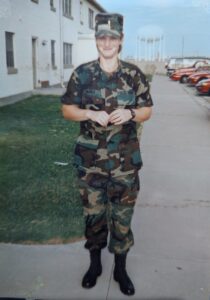
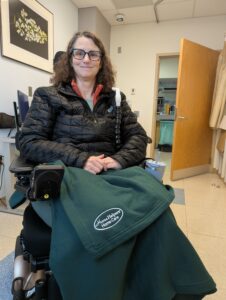
Researchers at the UMass Chan Medical School in Worcester have started working with several Veterans, including ALS patient and US Army Veteran, 2nd Lieutenant Liz Fassler who served for two years as a tactical control officer for the Patriots Missiles in the Air Defense Artillery Branch in the Middle East. By working with the researchers, Liz hopes to assist in their efforts to find if there is a correlation between ALS and those who have been deployed.
In addition to her own service, Liz comes from a long line of service members. She met her husband in the military, her father was a paratrooper in the 1960s, several cousins served their country in the military, and her two sons currently serve, one in the Army stationed at Fort Riley in Kansas, and the other in the National Guard. That’s why her participation in the study is so important to her, her family, and the percent of Veterans who have been, or are, affected by the disease.
Here is her story……
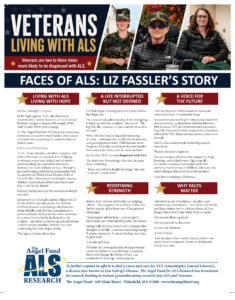
Faces of ALS: Liz Fassler’s Story
Living with ALS – – Living with HOPE
Service. Strength. Purpose.
In the fight against ALS—also known as Amyotrophic Lateral Sclerosis or Lou Gehrig’s Disease—progress begins with people. With their stories. With their courage.
At The Angel Fund for ALS Research, every face represents a reason to push harder, move faster, and never stop searching for answers that can lead to cures.
Liz is one of those faces.
A U.S. Army Veteran, a mother, a teacher, and now a vital voice in research, Liz is helping to advance a new and critical area of study—understanding the potential connection between ALS and military service. Through a groundbreaking initiative in partnership with researchers at UMass Chan Medical School, Liz and other Veterans are working to uncover whether deployment-related exposures may play a role in the disease.
For Liz, participation in this research is deeply personal.
Liz served as a Tactical Control Officer (TCO) for the Patriot missiles in the Air Defense Artillery Branch, completing a deployment in the Middle East. But her commitment to service extends far beyond her own experience. Liz comes from a family dedicated to our country—her father a paratrooper, her husband a fellow service member, and her two sons continuing that same legacy today.
This legacy is what drives her.
A Life Interrupted—But Not Defined
Liz first began noticing symptoms years before her diagnosis.
“As a special education teacher, I was struggling to keep up with the students,” she recalls. “My legs felt like concrete—I just couldn’t move fast enough.”
What followed was a long and frustrating journey—misdiagnoses, ineffective treatments, and growing uncertainty. Falls became more frequent. Everyday movements became harder. For over a year, there were no clear answers.
In October 2019, Liz was diagnosed with ALS.
The news was devastating—but also, in some ways, clarifying.
“There was relief in finally knowing,” she said. “It meant I wasn’t crazy.”
Redefining Strength
Before ALS, Liz was always the one helping others—the caregiver, the problem-solver, the first to step in. It has been one of her greatest challenges.
“Learning to ask for help… and accept it… that’s been one of the hardest parts,” she shares.
Living with ALS has forced Liz to rethink what strength looks like. It means conserving energy. It means saying no. It means finding new ways to give back.
And she still does.
Whether it’s creating handmade inspirational cards for friends or contributing to research that could change the future of ALS, Liz continues to show up—with purpose.
A Voice for the Future
Liz’s involvement in this research represents more than data—it represents hope.
Researchers are working to better understand her service history, to determine whether there is a link between ALS and environmental exposures faced by Veterans. For the many service members affected by ALS, these answers cannot come soon enough.
But Liz also understands something equally important:
There is life after diagnosis.
She encourages others to stay engaged, to keep learning, and to find ways—big or small—to remain connected and purposeful. Not everyone has the time or ability to advocate, she acknowledges, but every story still matters.
And hers is making a difference.
Why Faces Matter
Liz’s story is one of resilience, sacrifice, and unwavering commitment—not just to her family and her country, but to a future where ALS no longer takes what it has taken from so many.
She is more than a patient.
She is a partner in discovery.
A voice for Veterans.
A face of ALS.
And because of her—and so many others—we move closer to answers. Closer to treatments. Closer to a cure.